The Taxman Cometh Part 2

In “The Taxman Cometh Part 1″ we talked about the background on the Main Street Fairness Act and how it affects online retailers. In this post we explain what other costs a retailer may incur include:

All of the requirements from the Main Street Fairness Act will mean time and costs to online retailers. Let’s face it, online retailers will NOT try to directly interface with the 46 different “free” software applications offered by the states. It is just too complex. Retailers will instead use one of the tax rate aggregators that provide this service. Aggregators require that the retailer pass information about all of the products and services that are on an order. This information includes whether or not a particular item is taxable in a particular jurisdiction. Of course, some items are taxable in one jurisdiction, but not in another. The work to figure out whether an item is taxable falls on the retailer, not the aggregator.

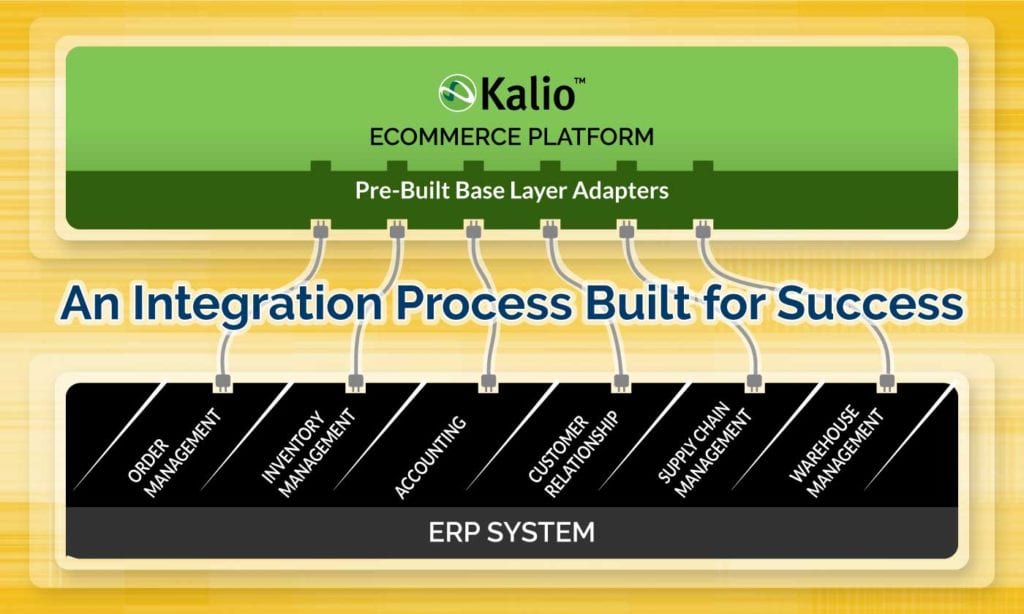
Further, retailers will need to integrate with the web site, the Order Management System, and possibly a separate accounting system with the aggregator. Other costs a retailer may incur include:

  • Architectural costs to allow for the input and maintenance of the product level tax codes required by a 3rd party system. A retailer with a home built system will have to make these modifications themselves. And this doesn’t include the OMS which will likely need even more modification.
  • Implementation costs – there are several points in checkout where tax will need to be calculated or recalculated
  • Integration costs – need to pass data and get data from a 3rd party service. The site also needs to be programmed for what to do when a call fails.
  • Data set-up costs (to code products with the correct codes used
  • Aggregator maintenance, set up

In addition, every web service call made in checkout runs the risk of slowing down the transaction and causing some error message/failure. This creates friction in checkout that will likely reduce checkout completion.

Below are ‘estimated’ costs that we calculated:

Kalio is prepared to simplify

There is some light at the end of the tunnel. Kalio recently spent thousands of dollars to modify its underlying architecture and build an adapter to third party aggregator software, which as you can see above, would be a huge cost and burden for online retailers.  Kalio did NOT pass this cost along to the retailers using their system. Many websites in the $2-50MM range have built their own eCommerce system…these companies will need to make these modifications at their own expense.


IRCE 2013 Recap

After spending last week in Chicago for IRCE 2013, Kalio is back at it in California distilling the information we gathered. With the world’s largest eCommerce event fresh in our minds, there seemed to be a few topics in particular that attendees were buzzing about: mobile and tablet commerce, globalization, and personalization for a catered shopping experience.

Growing Pains:

With countless innovations and new channels, retailers are looking for more capability and flexibility in their eCommerce platforms. Being that the retail environment is constantly changing, it is important for retailers to have the ability to quickly adapt and react, which could be a contributing factor to the 65% of retailers looking to re-platform in the next 48 months in a survey of 156 retail CIO and business executives across Europe and the US conducted by Forrester Consulting.

Mobile & Tablet Movement:

Mobile and tablet devices are constantly in the hands of shoppers, and with the forecast of mobile commerce possibly reaching 15% of eCommerce by the end of this year, it’s no mystery why it’s a major point of interest for online retailers around the world. Especially now that 48% of all time spent on the Internet is now via mobile or tablet, this could mean that there may be an emerging “mobile-first” mentality going forward.

Getting Global:

Al Gore was a keynote speaker at IRCE 2013 and heavily stressed on going global. He reminded those who attended of the constantly expanding global marketplace and the Internet growing as a community presents more opportunities for eCommerce than ever before. “Your customers are global, your competitors are global. The Internet connects billions of people and smart devices… If you keep on your toes and innovate properly, the opportunities are boundless.” In accordance with the issue of building a personal relationship with your shopper, globalization needs to be approached cautiously as not to alienate consumers by not appealing to local cultures.

Up Close & Personal:

Building a personal relationship with your shopper can be a daunting task, but with the prevalence of social media, it has become easier than ever before to make your brand more personable and accessible to the consumer. On Twitter alone, the value of a follower can be quantified in a 47% greater likelihood of visiting your website, a 39% greater chance of recommendation, as well as a 35% greater chance of re-tweeting your posts, and most excitingly: a 35% greater chance of purchasing.


The Taxman Cometh Part 1

There has been big news regarding the Internet Sales Tax Bill, also known as the Main Street Fairness Act that is front and center on the minds of online retailers and how it will impact their businesses.

Quite frankly, passing the Main Street Fairness Act bill will require a lot of work and a lot of cost! While we hope the House dramatically simplifies the requirements for online retailers, Kalio already did the work to be ready for a full-blown sales tax integration.

Background on the Main Street Fairness Act

About ten years ago a number of big box retailers, including Walmart and Target, began pushing Federal legislation that would require internet (and catalog) merchants to collect sales tax on all transactions that ship to places where a sales tax is due. Their bill, called the Main Street Fairness Act, has been voted down many times over the years in Congress.

The Senate took up this bill about a month ago. The Democratic leadership scheduled it for a vote without any debate or allowing any amendments. It passed with 68 votes.

The “pro” side of this bill focuses on the “unfair” advantage internet sellers have because they don’t have to collect sales tax. They also have stated that it will be “easy” for retailers to collect the tax because each of the 46 states with a sales tax will provide their own “free” software for tax calculations to merchants. However, it’s not as ‘easy’ as they make it seem.

The bill the Senate passed requires retailers to collect and remit sales tax in 46 states to 7900 taxing authorities (many counties and cities have an additional sales tax on top of the state rate) and to 551 Indian tribes. This doesn’t sound very ‘easy’ to us. Note: The bill exempts retailers with less than $1MM in annual online sales.

How does this affect online retailers?

All of these requirements will mean time and costs to online retailers. Let’s face it,online retailers will NOT try to directly interface with the 46 different “free” software applications offered by the states. It is just too complex. Retailers will instead use one of the tax rate aggregators that provide this service.  Aggregators require that the retailer pass information about all of the products and services that are on an order. This information includes whether or not a particular item is taxable in a particular jurisdiction. Of course, some items are taxable in one jurisdiction, but not in another. The work to figure out whether an item is taxable falls on the retailer, not the aggregator.

Keep an eye out for Part 2 of this post on what other costs a retailer may incur include…

Video: Emmanuel de Boucaud, Kalio’s Executive Vice President of Sales and Marketing, Discusses Tablet Shoppers

Emmanuel de Boucaud, Kalio’s Executive Vice President of Sales and Marketing, sat down with Multichannel Merchant Senior Content Manager Tim Parry to talk about the impact of tablet commerce on the holiday 2012 shopping season. The video was filmed at IRWD 2013.

How election number crunching can help your marketing strategies.

Daniel Shea for TIME (Click image to visit source)

As the dust settles on the presidential election, we’re starting to hear more about how the Obama campaign used email marketing, social media, split testing and data mining to raise money and turn out the vote. This article from TIME Magazine gives a short, behind-the-scenes look. No matter your political leanings, there are good marketing lessons here. I was particularly impressed with the use of Facebook to turn out voters. Enjoy (and learn!)

Get an Extra Boost for Black Friday, Cyber Monday, and Beyond

The holiday season is just about here which means more shoppers than ever before.  According to the National Retail Federation, for the first time more than half of U.S. consumers will shop online this holiday season… and not just on Black Friday and Cyber Monday.

We all know that Black Friday and Cyber Monday are the busiest shopping days of the year, however recent studies show that consumers are not content to wait for deals and offers until the day after Thanksgiving.  One indication of this is the recent report for email service provider Responsys, Inc. who reported that 80% of major retailers will send e-mail marketing messages to consumers on Thanksgiving Day this year, up from 76% last year, 60% in 2010 and 45% in 2009.  With that said, if you haven’t done so already, it’s not too late to give your site an extra boost to prepare for the holiday shopping season.

Larry Kavanagh, Chief E-commerce Strategy Officer at Kalio, suggests the following simple and effective Tips to help prepare your site before, during, and after Black Friday.

Easy to Implement Tips:

  1. Do a “Black Friday preview” promotion.  As noted above, the selling season is starting earlier and earlier. Get your first “black Friday” promotion out at least a week in advance.
  2. Promote the 12 days of Christmas!  Promote a ‘product of the day’ via an email campaign or Facebook posts.  Send your first email/post on the afternoon of Thanksgiving!  An email a day sounds like a lot, but it can pay off if you feature a different product/offer every day.
  3. Advertise your holiday deals in PPC (Pay Per Click) messaging.
  4. “Get on the nice list.”  Set up a promotion to get email signups from your website and Facebook page right away. The message is “don’t miss out the great deals this holiday season.” Also, don’t forget to “get your friends on the nice list” promotion through email.
  5. Re-fresh your navigation.  For example, emphasize the top selling categories from last holiday. Use the Page Value metric in Google Analytics to find your top performing categories. These categories make great landing pages in email. You can also create new categories, like ‘gifts for men under $50’, for destination shoppers.
  6. Abandoned cart emails.  If you aren’t sending emails to folks who abandoned carts, you should. Shopping from the office is particularly prevalent around holiday time, and abandons happen because the phone rings, the boss stops by, etc.  If you are sending out ACEs (abandoned cart emails), put a holiday touch to them and include specific call outs or triggers based around “last day to order using ground”, 2-day, and overnight shipping, and still get their package before the holidays.
  7. Place trust marks in the right places.  You will have shoppers who are new to your site. You can increase conversion of these particular visitors by making them feel safe.  Use services such as Optimizely to split test your trust mark location.  Good places to place trust marks are next to the add-to-cart button on the Products page or next to the credit card information on the check-out page.
  8. Include ‘last day for standard and expedited shipping’ messaging on your site, in email, and on Facebook.  This is a big deal.
  9. Fine tune your search.  Review the search phrases entered on your site daily starting Black Friday; failed searches go up at this time of year. Your website or site search provider gives you tools to redirect these failed searches to the appropriate product page.
  10. Look for bloated pages and bloated images.  These are the biggest culprits for slowing down site speed.  When you add an image to your site through the “art” folder, these are not compressed automatically, unlike our image import routine.  Take advantage of free services like www.webpagetest.org to identify large images and find pages with more than 250K of images on them. Adjusting these will give your site speed a big boost!

For more information or if you need help putting these tips into place, please contact our Installed Base Professional Services or Kalio e-commerce consulting services.

Larry KavanaghLarry Kavanagh
Chief eCommerce Strategist,
Kalio